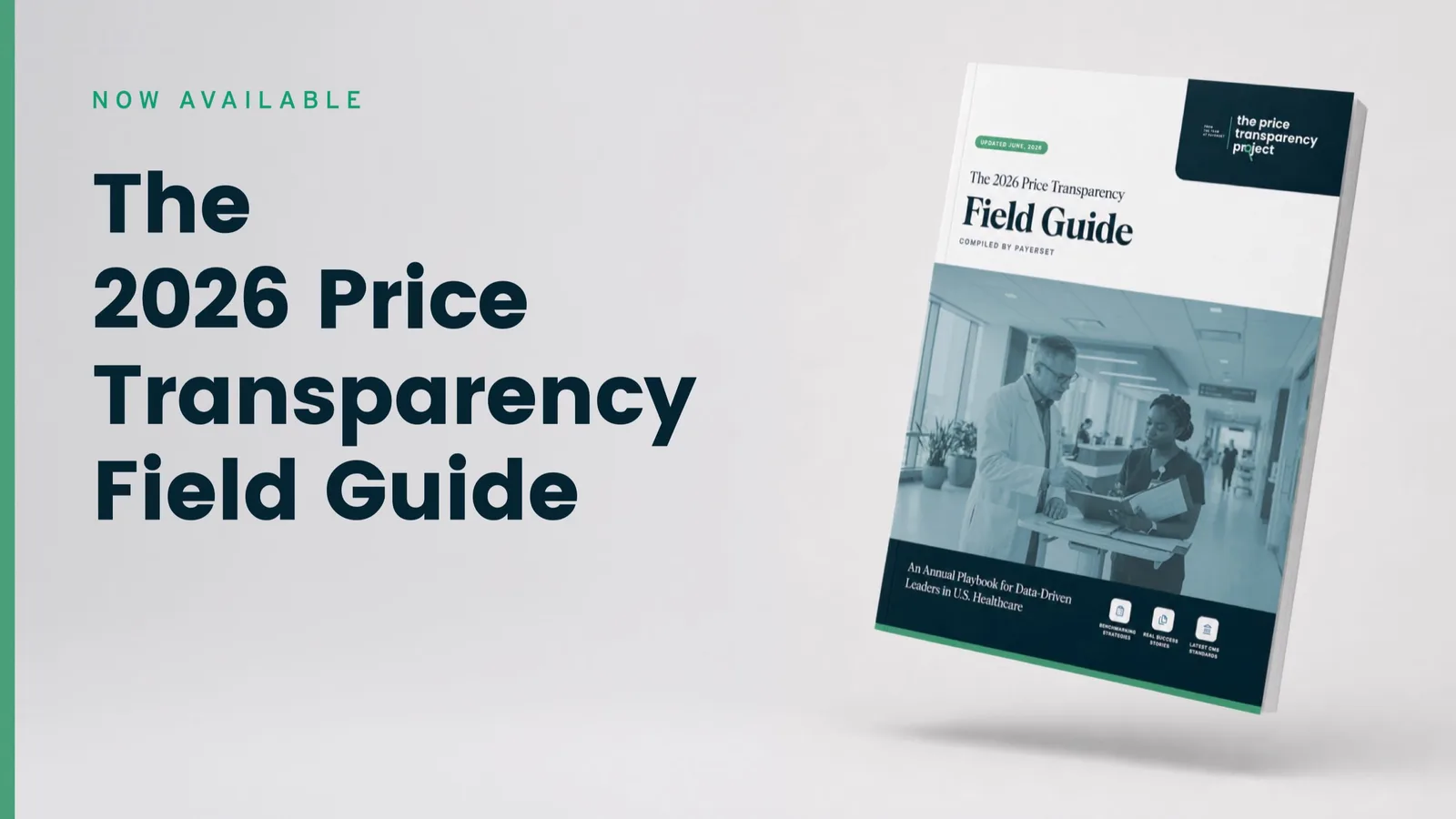
We’re very excited to introduce you to the first flagship resource from The Price Transparency Project.
It’s called The 2026 Price Transparency Field Guide, and we debuted it at HFMA earlier this month. It’s been creating a lot of buzz.
If you work on the finance or managed care side of a health system, you’ve watched price transparency move from a compliance checkbox into a strategic asset. The industry changes rapidly, and the Field Guide helps leaders in healthcare finance adapt to those changes and prepare for what’s coming next.
Why we built it
Our goal was to create the best resource a healthcare finance professional could pick up on this subject. We wanted something short and usable: the new CMS standards and the strategies we watch leading managed care teams run, grounded in the latest data and compressed into a guide you can finish over a coffee. By the time you close it, you’ll know what your peers are doing with these files, and what payers already know.
Payer files now cover roughly 1.7 million care-delivery NPIs. And as of 2026, nearly every hospital in the country has posted a machine-readable file with rates a named executive has attested are true, up from 27% full compliance in 2021. The data finally got good enough to act on, and the guide is about acting on it before your competitors and payers do.
What’s inside
A few of the things you’ll find inside the guide:
-
The day the single-code comparison stopped working. We walk through a real chest-pain ED visit where one hospital looked like it out-earned its competitor on the 99284 facility fee. Build the full clinical bundle around that visit, and the conclusion flips: the same hospital was paid about $249 less per visit once every line item was counted. We show why single-code benchmarking misleads, and how to bundle instead.
-
The maternity rates that weren’t there. One of the largest systems in the NY metro was prepping for a negotiation and found a top-five competitor with zero maternity and OB/GYN rates on file. The rates existed. They were sitting in an AP-DRG structure nobody without the contract had ever seen, running 3 to 4 times the market benchmark. We explain where the highest-dollar carve-outs hide and how to surface them before a negotiation, not after.
-
A negotiation playbook you can run before the payer does. Payers now arrive at renewals holding their own transparency analysis. We lay out the five-step process leading managed care teams use to build the counter-narrative first, with two 2026 case studies: a hospital that turned a payer’s 15% overpayment claim into a roughly 2% reality and avoided the cut, and a system that won a rate increase on a growth service line sitting 35% below market.
-
What’s actually changing in the rules. Schema 2.0 went live February 2. Attestation enforcement, where a named senior executive at every hospital signs that the rates are true, accurate, and complete, began April 1. And the proposed Schema 3.0 could collapse fifty redundant rate files into one per network, while adding utilization, taxonomy, and change-log files that don’t exist anywhere today. We break down what each change means for the people who pull these files, and we look ahead to the 2028 wave of standardized drug pricing data that’s already reshaping fiduciary expectations.
Leaders are already using it
The response since we started circulating print copies at the HFMA Annual Conference has been better than we hoped. CFOs, managed care leaders, and benefits advisors have already given some incredible feedback.
The strategies and case studies inside come from the same work we do alongside leading health systems and consulting firms preparing for real negotiations. We didn’t want this to live behind a paywall, so we’ve made it available for free.
Whoever sits across the table from you at the next renewal is already reading this data. This guide helps ensure you’re reading (and using) it better.